
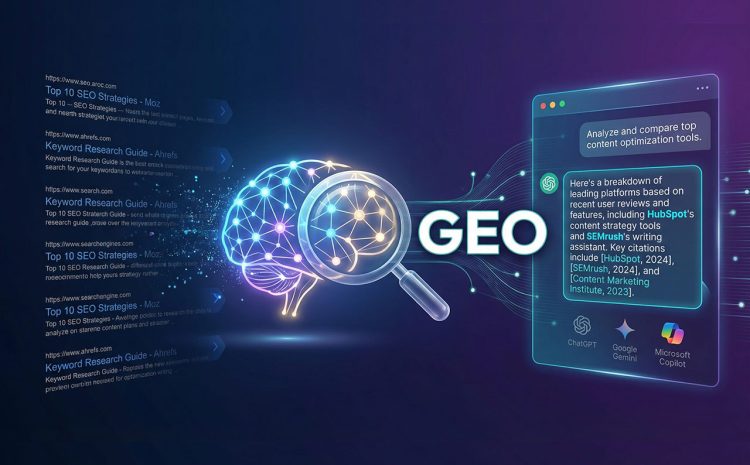
What is GEO ?
GEO (Generative Engine Optimization): SEO Strategies in the Age of Artificial Intelligence
Advances in Artificial Intelligence (AI) have transformed the way people search for information online. Whereas users previously relied solely on search engines like Google, many are now turning to AI tools such as ChatGPT, Gemini, Perplexity, and Bing Copilot to get faster and more practical answers.
This is why a new concept has emerged in the world of digital marketing and SEO: GEO (Generative Engine Optimization).
GEO has become a crucial strategy for businesses aiming to remain relevant and visible in the era of AI-driven search.
What is GEO (Generative Engine Optimization)?
Generative Engine Optimization (GEO) is a strategy for optimizing content and websites so they can be understood, recommended, and referenced by generative AI engines such as:
ChatGPT
Google AI Overview
Gemini
Claude
Perplexity
Bing Copilot
While traditional SEO focuses on improving rankings on Google’s search results pages, GEO focuses on ensuring your content:
✅ is understood by AI
✅ serves as a source of answers for AI
✅ is recommended by AI to users
✅ has semantic authority
In other words, GEO is the evolution of SEO in the era of Artificial Intelligence.
Why Is GEO Important for Business?
Internet users’ behavior is starting to change.
Nowadays, many people seek answers directly through AI rather than typing keywords into Google the traditional way.
Example:
In the past, users searched for:
“best SEO agency Bali”
Now, users ask AI:
“What is the best SEO agency in Bali for hospitality businesses?”
The AI then selects the websites it deems most relevant and trustworthy.
If your website is optimized for GEO, the chances of your business being mentioned and recommended by the AI will be significantly higher.
How Does GEO Work?
AI doesn’t just read keywords.
AI understands:
- context
- entities
- relationships between topics
- website authority
- content structure
- semantic meaning
That’s why GEO requires a more in-depth approach than standard SEO.
SEO-Friendly GEO Strategy
1. Build Topical Authority
Your website should focus on a specific niche so that AI can understand your business’s expertise.
Examples:
SEO for hotels
digital marketing for villas
hospitality marketing
real estate websites
The more specific your niche is, the easier it is for AI to recognize your website’s authority.
2. Use a Clear Content Structure
AI really likes well-organized article structures, such as:
<h1>Main Topic</h1>
<h2>What is GEO?</h2>
<h2>Benefits of GEO</h2>
<h2>How GEO Works</h2>
<h2>Why GEO Matters</h2>
<h2>FAQ</h2>
This structure helps AI better understand the page’s content.
3. Create High-Quality, In-Depth Content
Thin and overly short content is finding it increasingly difficult to compete.
SEO-friendly articles are typically:
- comprehensive
- in-depth
- answer users’ questions
- have high semantic relevance
Ideally, articles should include:
- 1,500–3,000 words
- FAQs
- clear headings
- internal links
4. Use Schema Markup
Schema helps AI understand website information more accurately.
Recommended Schema types:
- Organization Schema
- FAQ Schema
- Article Schema
- LocalBusiness Schema
- Service Schema
Schema is one of the key foundations of GEO.
The Benefits of GEO for Businesses
With the right GEO strategy, businesses can achieve:
✅ greater visibility
✅ stronger brand authority
✅ opportunities to be recommended by AI
✅ high-quality organic traffic
✅ more leads
✅ increased conversions
✅ a competitive advantage in the AI era
Want to Get Your Website Ready for the AI Era?
If you want to boost your website’s visibility on Google while preparing your business for AI search engines, a GEO strategy can be a key step toward long-term digital growth. Contact Orizona Digital for a free consultation.